When a thermostat is operating properly, it barely registers as background noise in your life. Once it has trouble, though, it can leave your house uncomfortable and your bills going up. Especially if the thermostat keeps resetting, you may be perplexed about what to even do.
A reset is when the thermostat reverts to a default or prior setting. This often happens due to power loss. This is different from a reboot, which typically occurs in a smart thermostat after an update. It is also different from settings changing on schedule or based on adaptive smart features.
There are nine common reasons why your thermostat may keep resetting. Understanding them is important for knowing when to service or replace the thermostat.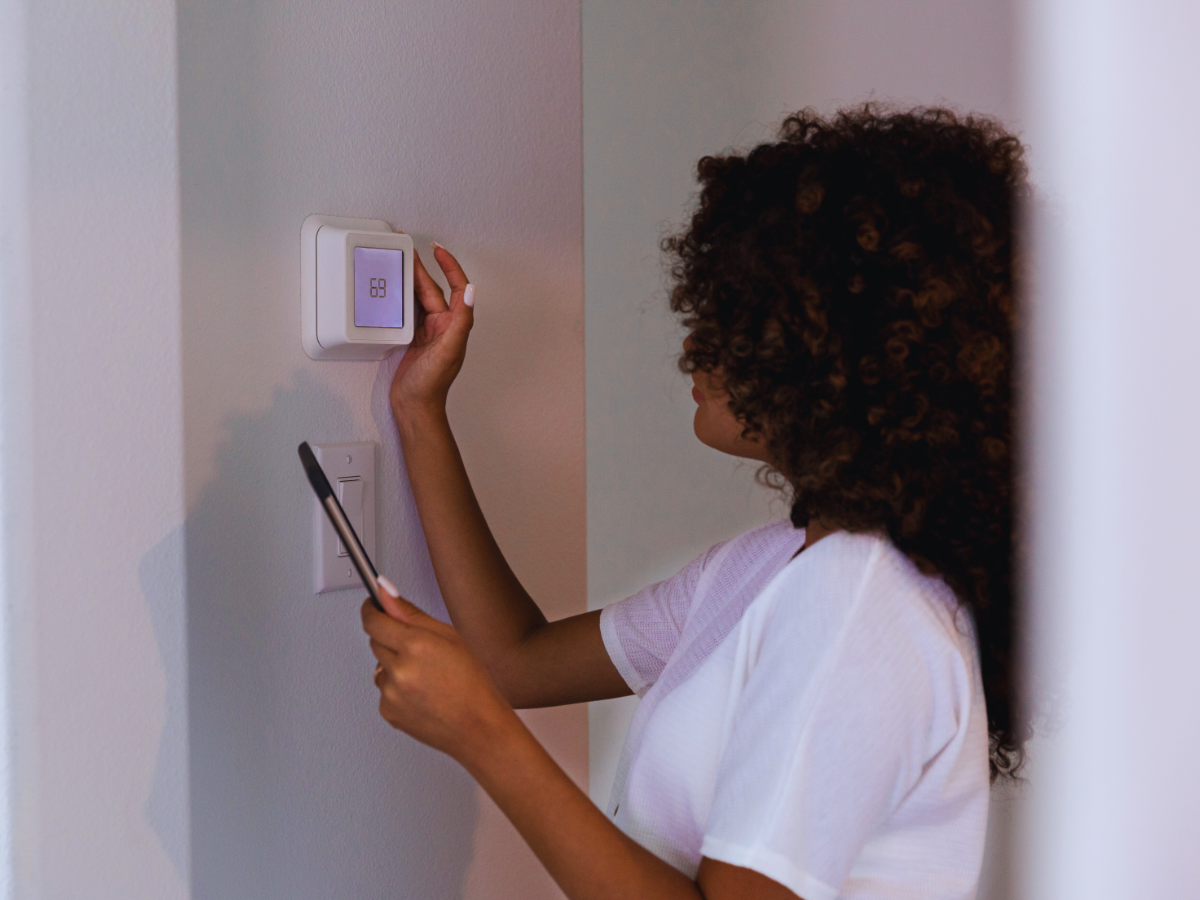
Quick Takeaways
- Power loss causes most resets.
- Dead batteries are the most common reason for a power loss.
- Loose wiring can interrupt HVAC communication.
- Smart thermostats reset due to software or Wi-Fi problems.
- Some resets point to HVAC electrical issues.
Why Does My Thermostat Keep Resetting?
1. Dead or Weak Batteries
Battery voltage will drop to unsustainable levels with age or high use. When this happens, you may see a dim or blank display, unresponsive buttons, a low-battery icon, and settings that won’t keep. Replacing the batteries usually resolves the issue.
2. A Loose or Disconnected C-Wire
The common wire (C-wire) provides continuous power to some thermostats, supplementing battery power. If the C-wire is loose, the thermostat may not have enough power to sustain operations. The net effect is repeated reboots or resets.
3. Brief Power Interruptions
Breakers tripping and electrical fluctuations like surges and brownouts cause a similar problem to a loose C-wire. In the Tampa area, we frequently have storm-related issues like high winds and lightning that knock out power temporarily.
4. Faulty Thermostat Wiring
Whether due to poor initial installation or age, loose wires may not fully contact. Terminals and contacts also oxidize, worsening connections. Sometimes wires are pinched against the wall.
5. Software or Firmware Problems
Manufacturers push updates to programmable and smart thermostats. Even if the update goes perfectly, it may require a reboot. Likewise, buggy software or firmware can glitch, causing spontaneous resets.
6. Incorrect Programming Settings
Scheduling overrides can create odd conflicts that lead to automatic resets. Also, eco modes on some thermostats may override even manual settings. It is important to understand which feature gets priority so the changes don’t feel like an unscheduled reset.
7. HVAC Control Board Problems
Ultimately, your thermostat’s entire job is to talk to the HVAC’s control board. Loss of connectivity to the control board may compel the thermostat to reset. Also, the air handler powers some thermostats, so loss of power at the air handler can force a thermostat reset.
8. A Failing Thermostat
Thermostats suffer more wear and tear than you might expect. Hands operating them jostle their internal components. Environmental exposure also causes corrosion, even in clean indoor environments. Especially here in Florida, coastal salty air encourages component corrosion. These issues compound with age, leading to resets.
9. Improper Thermostat Installation
Running the wiring incorrectly can trigger odd behaviors, including resets. Also, a thermostat needs to support the wiring and control unit of the HVAC. If there’s a mismatch between the HVAC and thermostat, resets can occur unpredictably. Likewise, the installation needs to include proper programming. If the schedule is wrong, the thermostat may keep resetting.
How to Stop a Thermostat From Resetting
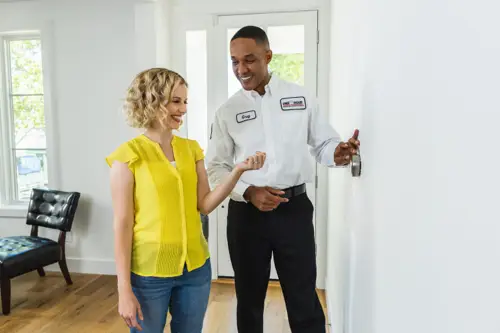 The easy move is to replace the batteries, since this resolves many thermostat resets. Check the breaker for the HVAC circuit, confirming that it is properly seated and fully on. Inspect the wiring. Also, update any software or firmware. If the issue persists past this point, schedule a professional diagnostic.
Should You Repair or Replace Your Thermostat?
Repair makes sense typically with a newer unit, especially if the problem is something simple like a dead battery, poor wiring, or the settings. Replacement is best when the components are old or damaged. If the thermostat is a mismatch for the HVAC, replacement is the right move.
Signs You Need a New Thermostat
Frequent resets that don’t resolve after a professional troubleshooting call for a replacement. If the screen is blank and won’t stay on even after resolving all power losses, then it’s time to replace the thermostat. Likewise, faulty sensors can lead to wildly incorrect readings. If the HVAC does respond at all, even if the thermostat is brand new, then it’s time to replace the thermostat.
FAQ
Why does my thermostat keep resetting to 70 degrees?
70°F is a very common factory setting, so many thermostats reset to that number. Dead batteries, power disruptions, loose wires, and scheduling and eco mode issues may cause this particular reset.
Can low batteries cause a thermostat to reset?
Yes, this is the most common reason for a reset. The unit can’t hold settings in memory. Some units won’t even power on with a dead battery.
Can a bad HVAC control board cause thermostat problems?
Yes, a faulty control board or air handler can disrupt power to the thermostat.
Why does my smart thermostat keep rebooting?
Frequent reboots occur with firmware and software upgrades, particularly those that are buggy. Loss of Wi-Fi sometimes forces a reboot. An unstable C-wire can interrupt power and trigger a reset, too.
How long should a thermostat last?
Expect to get ten years of service from your thermostat. After ten years, failures and resets become much more common.
Do I need a new thermostat if it keeps resetting?
That may not be the case. Sometimes the fix is as simple as putting in a new battery, changing the settings, or dealing with the wiring.
Thermostat Installation and Replacement in Tampa, FL
 Recurring thermostat resets often indicate a problem with the wiring, the equipment, or HVAC/thermostat compatibility. A professional technician can diagnose root causes, including installing a replacement model, if necessary.
One Hour Air Conditioning & Heating is proud to serve the people of Tampa, FL, and the surrounding communities. Our HVAC technicians are experts in thermostat installation, replacement, and diagnostics. Also, we’re always on time or you don’t pay a dime.
If you’re worried something might be wrong with your Tampa home’s thermostat, contact One Hour Air Conditioning & Heating to schedule an appointment.