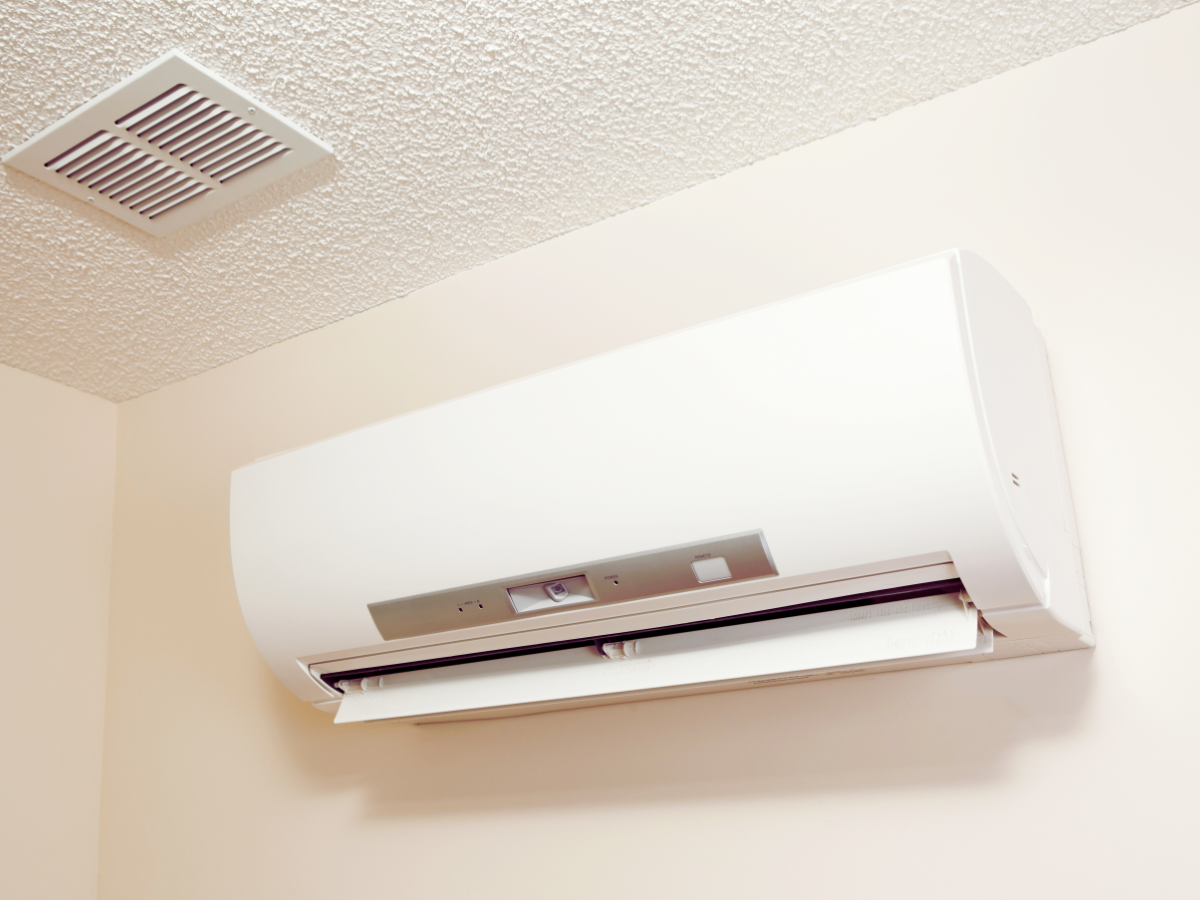
 Ductless mini split systems are quickly becoming the go-to alternative to traditional forced-air central AC units, offering energy efficiency, ease of maintenance, flexible installation, and a myriad of other benefits. However, despite the growing popularity, many misconceptions are preventing homeowners from taking full advantage of all that ductless systems have to offer.
In this guide, we’ll debunk the most common myths about ductless mini splits, providing the straight facts to help you make an informed, confident decision about how you can heat and cool your home in Tampa.
What Is a Ductless Mini Split System?
A ductless mini split is a type of HVAC system that can heat and cool a space without the use of ductwork. They’re two-component systems consisting of an outdoor compressor and an indoor air handler.
Connecting the two components are refrigerant lines and electrical wiring. These systems work by transferring heat between the indoor and outdoor units, providing precise, zoned temperature control.
Why Are There So Many Misconceptions About Mini Splits?
Of the approximately 90 percent of homes in the United States with air conditioning, about two-thirds have a central HVAC system. The fact is that central units dominate the HVAC market.
They’ve been the standard since about the late 1970s, with most builders incorporating space for ductwork into homes ever since. Central air is ubiquitous, but that doesn’t mean it is the best choice.
Misconceptions about ductless mini splits run rampant, mainly due to a lack of familiarity with the technology. Mini split systems operate uniquely from their more standard counterparts, and that unfamiliarity breeds countless myths. Because so few people truly understand how these systems work, it’s difficult for most to realize that ductless systems bring many game-changing benefits to the table.
The assumption is that, because central HVAC is so dominant, it’s automatically the better choice. However, that couldn’t be further from the truth, and ductless mini splits are often better in many ways.
7 Biggest Myths About Ductless Mini Split Systems
Don’t let unfamiliarity prevent you from making the right decision for your home. Let’s explore and debunk some of the most common myths about mini split systems.
Myth 1 – Mini Splits Are Only for Single Rooms or Additions
When mini split systems first started to gain widespread traction, many utilized them to heat and cool single rooms. Thanks to the lack of ductwork, that’s still a common practice today, serving as a more practical and cost-effective choice for home additions or ADUs. However, contrary to popular belief, you don’t have to limit your comfort to a single room.
Modern multi-zone systems allow HVAC professionals to install air handlers in multiple rooms, providing coverage to every space that needs it. For example, you can have a single system covering a Florida room, a garage, and even a backyard studio space. Best of all, each air handler provides customizable comfort. That means you can set different temperatures in each zone.
Myth 2 – Ductless Systems Can’t Heat and Cool an Entire House
Another common myth about mini splits is that they’re not capable of heating or cooling an entire home. That couldn’t be further from the truth! High-capacity multi-zone systems can accommodate multiple air handlers. Depending on the size of your home and your needs, it’s also possible to connect all those heads to a single outdoor compressor.
As mentioned earlier, each air handler lets you fine-tune zones to your liking. Heat one room while cooling another. The choice is yours, and ductless mini splits provide reliable year-round performance. You gain more flexibility and control over comfort levels with a mini split than any central HVAC system could provide.
Myth 3 – Mini Splits Are Hard to Install and Expensive
 The beauty of choosing a mini split system over a traditional central unit is that you don’t have to worry about ducting. That inherently makes installing a mini split easier and more cost-effective. Plus, you have more flexibility in how and where HVAC experts install those interior air handlers.
For perspective, retrofitting a home without existing ductwork can cost more than an entire mini split system, and that’s not even including the cost of the central unit. The costs of planning and retrofitting ductwork alone can be astronomical. When you go ductless, you avoid those added costs to gain substantial upfront savings.
Myth 4 – Mini Splits Are Noisy
Excessive noise is a common concern among those looking to upgrade their HVAC system. Because mini split systems use a visible interior air handler, many assume that they produce considerable noise that could interfere with sleep and relaxation.
Yet again, that’s an unfounded myth. Air handlers produce between 20 and 40 decibels, which is equivalent to someone whispering. Outdoor units are slightly louder at 45 to 60 decibels. That’s about the same as the hum of a modern refrigerator or a normal conversation.
For comparison, a central AC system’s outdoor unit can be as loud as 70 decibels, which is similar to a vacuum cleaner or your washing machine running. Not only does that noise make enjoying your outdoor space challenging, but the ductwork can also act as a conduit for sound waves and vibrations.
As you can see, ductless mini splits are significantly quieter than the alternative.
Myth 5 – Mini Splits Don’t Last as Long as Central HVAC
Mini split systems are far less bulky. As a result, many view them as fragile and easy to break. Fortunately, that’s not the case.
A standard central HVAC system has an average lifespan of 15 to 20 years with ongoing care. Mini split systems last about 20 years with professional care, which is on par with higher-end central units. Overall, ductless systems have fewer points of failure that could threaten longevity. Should things go awry, mini splits are also generally easier to fix or replace.
Myth 6 – Mini Splits Don’t Improve Air Quality
Did you know that the ductwork of a standard six-room house can collect around 40 pounds of dust, pet danger, mold, bacteria, and other allergens a year? If you don’t invest in regular duct cleaning, a central AC unit can make your indoor air quality up to five times worse than it is outside!
By not having ductwork to collect allergens, mini splits help you avoid the air quality issues of traditional forced-air systems. That’s not all. Many air handlers in ductless systems offer advanced, multi-stage filtration. That advanced filtration makes a difference, and the easy accessibility to air filters makes maintaining superior air quality a breeze.
Myth 7 – Ductless Units Are Ugly and Hurt Home Design
Mini split air handlers have a reputation for being a bit of an eyesore, and many believe that they’ll hurt the aesthetics of a home or limit one’s interior design capabilities. However, these systems have come a long way!
Nowadays, you have more options when integrating air handlers into your home. In addition to traditional wall-hung units, there are concealed options, flush-mounted ceiling cassettes, and plenty of sleeker designs. HVAC professionals can help you choose what type of air handler is best for your operational and aesthetic needs, letting you integrate the unit into your home without sacrificing style.
The Truth About Ductless Mini Split Systems
 As you can see, many of the considerations that make homeowners hesitate about choosing ductless mini splits are nothing more than outdated myths. Ductless systems can heat and cool entire homes, provide customizable year-round comfort, improve air quality, and reduce unnecessary noise.
They’re also more cost-effective to install, offer substantial style and placement flexibility, and can last longer than central HVAC systems with proper care.
When you look at the facts, it’s easy to see why ductless mini splits are gaining so much traction. They’re often a better solution than the standard forced-air alternative across the board.
Benefits of Ductless Mini Splits Beyond the Myths
Beyond those now-debunked misconceptions, ductless mini split systems in Tampa have so much to offer homeowners like you. Here are a few other benefits you should know about.
•Energy Efficiency and Superior Inverter Technology: Many studies show that mini splits can reduce heating and cooling costs by as much as 50 percent. There are a few reasons why. First, the lack of ductwork prevents energy loss, and systems don’t have to work hard to combat resistance while moving air through ducts.
Mini splits also benefit from variable-speed inverter technology. Highly efficient inverters adjust the power of the compressor to match your heating and cooling needs. Unlike forced-air HVAC systems that often cycle on and off at full capacity, mini splits avoid unnecessary energy waste by using less power during periods of low demand.
•Flexible Installation in New and Old Homes: A ductless system is a fantastic choice for both new and old homes. Many older buildings lack space for ductwork, forcing you to sacrifice valuable square footage while still settling on unsightly solutions to create room for ducts where there is none.
That’s not the case with a mini split. Refrigerant lines and wiring can all live behind your walls, providing more flexibility during the installation process. Whether you’re doing a new build or modernizing your existing home, mini splits offer unmatched versatility.
•Better Indoor Air Quality: Thanks to the absence of ducting that can accumulate filth, mini splits can help you dramatically improve air quality in your home. Advanced filtration processes can keep dirt, mold, pollen, pet dander, and more out of your home. Pair all that with easily accessible filters you can swap out regularly, and maintaining healthy air quality has never been simpler.
•Lower Long-Term Costs: In addition to lower installation costs compared to ducting retrofits, mini splits are more affordable over the long haul. These systems are more energy efficient and have a higher SEER rating than central HVAC systems.
You also get more control over how you heat and cool your home. Those savings add up, making ductless mini splits a far more affordable choice over the long term.
Quick Comparison – Mini Splits vs Central HVAC
| Features | Mini Split | Central HVAC |
|---|---|---|
| Installation | Simple (No Ducts) | Requires Ductwork |
| Efficiency | Very High (No Duct Loss, Variable-Speed Inverter) | Lower (Duct Loss, Fixed-Speed Inverter) |
| Lifespan | Average of 20 Years with Care | Average of 15 to 20 Years with Care |
| Air Quality | Cleaner (Advanced Filtration, No Ducts) | Ducts Can Collect Dust and Allergens |
| Noise | Quiet (20-40 dB for Air Handler) | Loud (Up to 70 dB for Compressor, Plus Fans and Ducts) |
FAQs About Ductless Mini Split Systems
Can a ductless mini split cool an entire house?
A multi-zone ductless mini split system can effectively cool an entire house. While single-zone units are better suited for smaller spaces, multi-zone systems can accommodate several air handlers with a single outdoor compressor.
However, HVAC professionals must install an appropriately sized system with accurate load calculations and strategic air handler placement for the best results.
How long do ductless mini splits last?
A well-maintained ductless mini split can last 20 years, on average. Standard central, forced-air HVAC systems typically last 15 to 20 years, making mini splits a longer-lasting alternative that compares to higher-end central units.
Are ductless systems worth the money?
Mini splits are a worthwhile investment due to their versatile installation, lower upfront costs, and long-term savings. Ductless systems don’t require complicated installation or retrofitting.
Furthermore, they’re more energy efficient while providing custom comfort across multiple zones.
Do ductless mini splits require maintenance?
All HVAC systems require maintenance, and ductless mini splits are no exception. Fortunately, they’re easier to maintain due to the lack of ductwork and easily accessible air filters.
Air filters require regular replacement to maintain performance and air quality. Mini splits also need occasional professional inspections and deep cleans.
Are mini splits good for older homes?
Mini splits are a superb choice for older homes that don’t have existing ductwork. Rather than retrofitting ducts, HVAC companies can install refrigerant lines and electrical wiring behind walls. The easy installation process is more affordable and provides greater flexibility.
Go Ductless to Save Money and Stay Comfortable with One Hour Air Conditioning & Heating
 There’s no better way to upgrade your home or future-proof a new build than by going ductless. Mini split systems aren’t the ugly, noisy, inefficient, or inflexible HVAC option that many assume they are. The reality is that ductless mini splits beat traditional central HVAC systems in many ways, helping you save money while enjoying custom comfort year-round.
Ready to make the switch? Call One Hour Air Conditioning & Heating today to learn more and explore your options. We’re Tampa’s most trusted HVAC company, raising the bar on quality and customer service while proudly serving homeowners throughout Tampa and the surrounding communities.
When you turn to us, you can expect prompt, professional attention and solutions that meet your every need. We’re always on time, or you don’t pay a dime!
Give One Hour Air Conditioning & Heating a call today to book your service appointment.