Once you’ve made a decision to install a ductless mini-split system, you also need to figure out how many indoor units you’ll need. There are a few factors to consider, including your layout, how you use the different rooms in your home and your cooling needs.
With the step-by-step guide below, you’ll gain a better understanding of how to select the right number of units for your home without guessing.
Quick Takeaways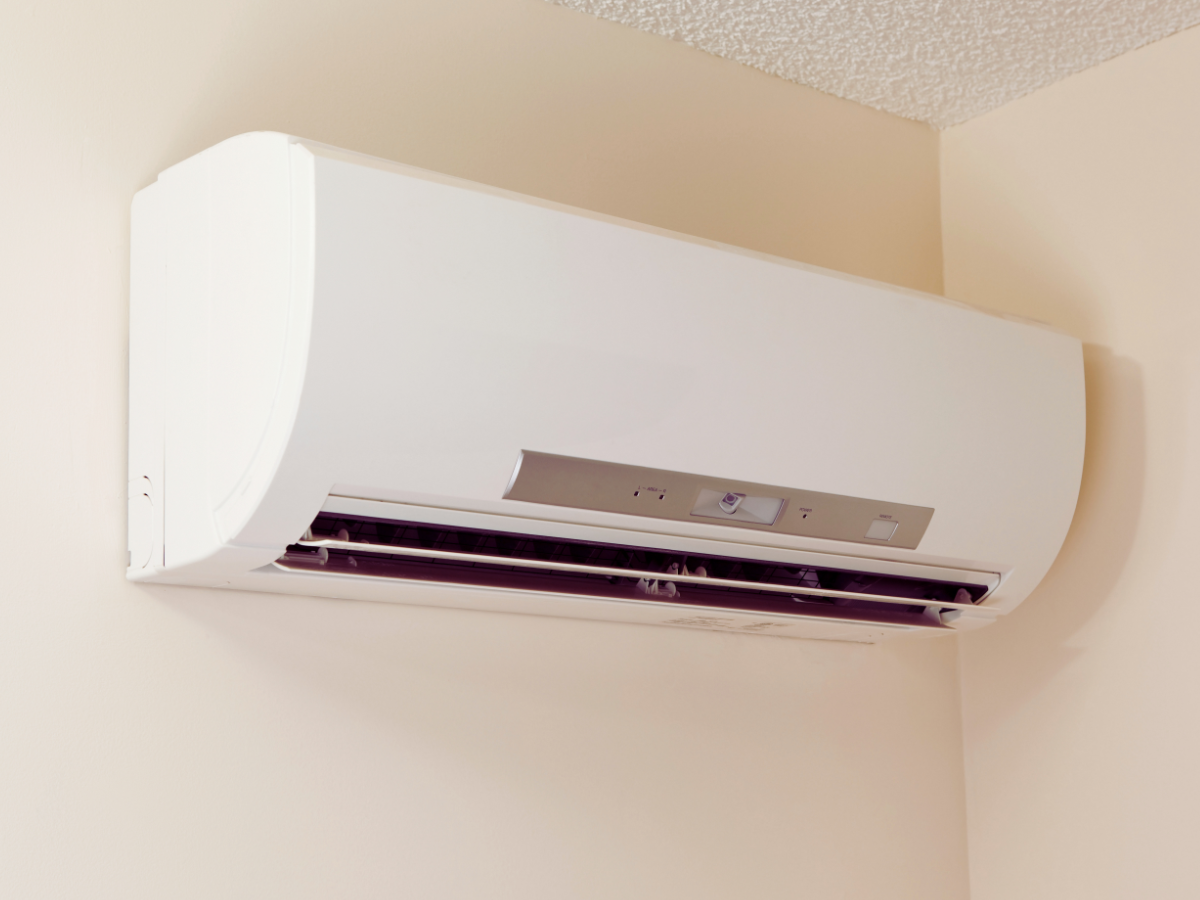
- You will usually need one indoor mini-split unit for each zone or room.
- A single unit is often sufficient in areas with open floor plans.
- Each bedroom usually has its own unit to maximize comfort.
- Total system capacity is measured in BTUs, and this is different from the number of indoor units.
- In a multi-zone system, several indoor units are connected to a single outdoor unit.
- With professional design and installation of your system, you’ll get the best performance.
How Many Mini-Splits Do I Need?
Usually, the answer is one mini-split for each room or for each area designated as a “zone.” In an open area, depending on its size and layout, a single mini-split may be enough.
However, you’ll need to account for airflow, room separation and temperature control preferences throughout your home to arrive at the right figure.
What Counts as a “Zone” in a Mini-Split System?
Each zone is an area where the temperature can be controlled separately from the temperature of the rest of the house. This means that each bedroom is usually its own single zone.
You can combine open living areas into one zone. Hallways and similar transitional spaces, such as foyers and landings, do not require a separate unit.
How to Determine How Many Mini-Splits You Need
While you can use the above information to get a better understanding of how many mini-splits you’ll need, we have the expertise and experience to identify an accurate number.
We’ll start by working with you to identify how many enclosed rooms need independent temperature controls. Next, we’ll look at whether there are any open plan areas that can share airflow. We’ll also take the frequency of use in each space into account.
We’ll then match each identified zone to an indoor mini-split unit. This will provide you with the right number of mini-splits to maximize your comfort without sacrificing efficiency.
Example: Typical Home Layout
To help you better understand, here’s a concrete example using a typical three-bedroom house.
- Each bedroom is one unit = 3 units
- Open living room and kitchen = 1 unit
- Office (or other additional room) = 1 unit
- Total = 4 to 5 indoor units
Whether you need four or five units will depend on layout and usage. For example, if you use the office infrequently and it’s just off the bedroom or the living room, four units might be sufficient.
Single-Zone vs. Multi-Zone Mini-Split Systems
 In a mini-split system, there is usually only one outdoor unit. “Single-zone” versus “multi-zone” refers to the number of indoor units.
If you have one indoor mini-split unit, it’s a single-zone system. If you have more than one indoor unit, it’s a multi-split system.
A single outdoor unit can usually power up to eight indoor units. Therefore, one outdoor unit is sufficient for the majority of homes.
Energy in HVAC systems in measured in units known as BTUs. Your indoor units can have different BTUs based on the requirement for each zone.
This is separate from the number of indoor units. The BTU capacity of the outdoor unit must be large enough to support all of the indoor units.
Factors That Affect the Number of Mini-Splits Needed
We’ll take several other factors into account when we determine how many mini-splits your home needs.
- Room size and square footage: Square footage is the most important element. As square footage increases, so does the number of indoor units you’ll need.
- Ceiling height: It’s necessary to increase the BTU capacity by 10% or more for each additional foot above the standard ceiling height of 8 feet.
- Insulation quality: Lower-quality insulation may mean that you need units with higher BTU capacity to compensate.
- Sun exposure: Sun-facing rooms may tend to be hotter than the rest of the house and may need their own indoor units.
- Doorways and airflow between rooms: You may need more units if airflow is poor or you tend to close doors throughout your house.
- Usage patterns: Bedrooms usually need their own units so that each occupant can control their temperature. A single unit may be sufficient for common areas although BTUs may need to be higher to compensate for the larger space and higher occupancy.
Can One Mini-Split Cool Multiple Rooms?
In an open layout or a over a small area, one mini-split may cool more than one room. However, due to airflow limitations, this isn’t possible if the rooms are separated because the cooling will be uneven. In most situations, each bedroom will need its own unit.
What Happens If You Install Too Few Mini-Splits?
Signs You Need More Units
You may not have enough indoor units in your home if your AC runs constantly, your rooms are not reaching the set temperature or there are hot and cold spots throughout your home.
Why Undersizing Causes Problems
If there are too few units or the capacity of the units is insufficient, the system comes under strain. This leads to poor airflow distribution, uneven temperatures and discomfort.
FAQ: How Many Mini Splits Do I Need?
Do I need a mini-split in every room?
Generally you do, but if there is an open area with good airflow, such as a combined kitchen and living room, you might be able to have one unit for that zone.
How many mini-splits do I need for a 3-bedroom house?
Usually you need between four and five. You’ll need one for each bedroom, one for the kitchen and living room area, and one if there is an office or other additional room.
Can one mini-split cool an entire house?
It may be possible if there is good airflow and the house is small and largely open-plan. However, most houses need more than one indoor unit for maximum comfort and performance.
How many indoor units can one outdoor unit support?
An outdoor unit can support up to eight indoor units.
Is it better to have more mini-splits or fewer larger ones?
It’s better to have more smaller units. This allows for better temperature control, increased comfort and even cooling.
Stay Cool With Expert Ductless Mini-Split Installation
 If you don’t know how many mini-splits you need for your home, don’t fall back on guesswork! That way leads to uneven temperatures and poor system performance.
At One Hour Air Conditioning & Heating, we offer ductless mini-split design and installation throughout the Tampa area. We’ll take every relevant factor into account to determine the right number of units for your home, including layout, airflow, room usage, sun exposure and more.
You can count on our expertise to ensure your comfort. And we won’t keep you waiting around. We’re always on time or you don’t pay a dime.
Contact One Hour Air Conditioning & Heating today to get a ductless mini-split system designed to provide maximum comfort in your home.