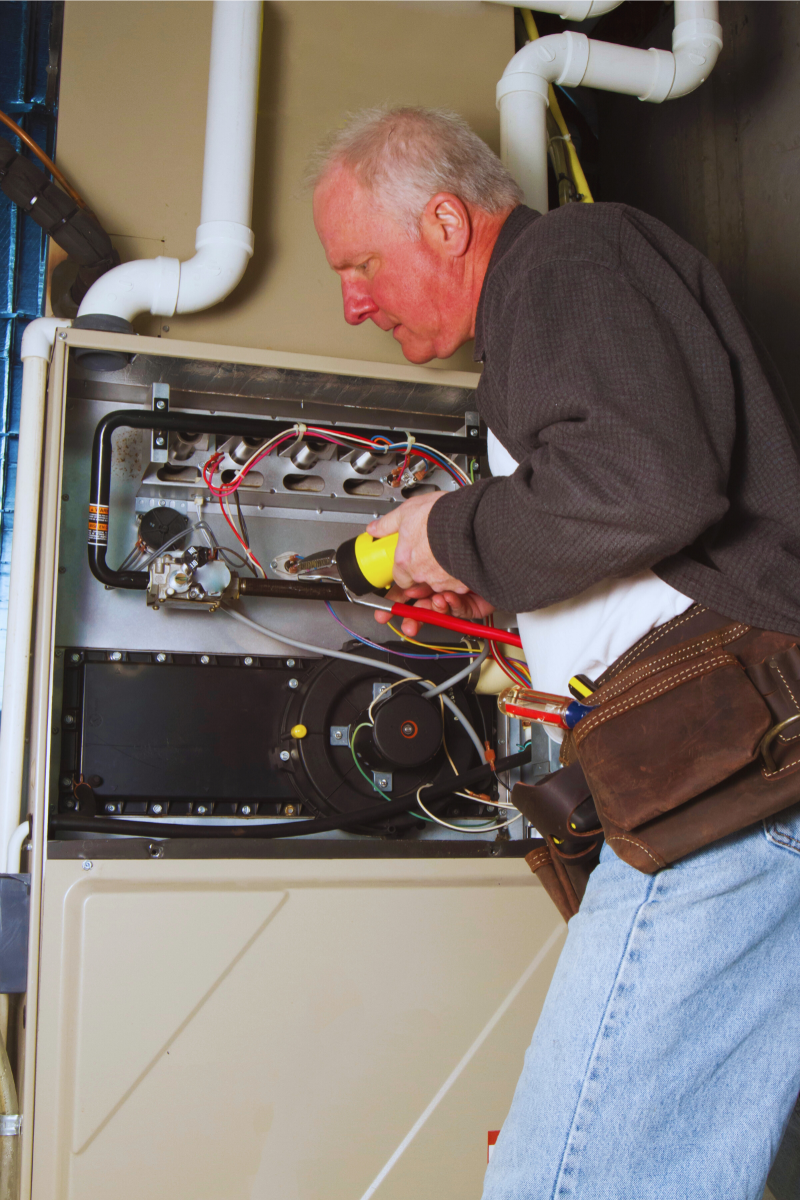
 A furnace overheating and shutting down isn’t a minor issue that you can ignore. Limit switches are designed to turn a furnace off if it gets too hot. If this safety mechanism is kicking in regularly, it’s crucial to get professional help diagnosing and repairing the underlying defect.
Quick Takeaways
- An overheated furnace is indicative of ignition, airflow, or mechanical problems.
- In most cases, the main cause of this problem is a dirty air filter.
- If the furnace overheats, it triggers a safety shutoff. This feature prevents damage and potential fires.
- When overheating recurs frequently, it can result in a cracked heat exchanger.
- Incessant overheating is a sign that you need to schedule professional repairs.
What It Means When a Furnace Overheats
A furnace is made to get warm. However, if it heats up too much, this triggers the limit switch to shut off the furnace as a safety response. For most furnaces, an internal temperature of 180℉ to 200℉ will result in the unit automatically turning off.
The Most Common Reasons a Furnace Overheats
Based on the order of likelihood and severity, the following are the most likely reasons why a furnace may become excessively hot.
- Dirty air filters
- Blocked vents or ductwork restrictions
- Issues with the blower motor or fan
- Malfunctions with the ignition or flame sensor
- An oversized or poorly installed furnace
- Damage to the heat exchanger
How Airflow Problems Cause Overheated Furnaces
As air flows into the furnace, it cools down the heat exchanger. Normally, airflow enters the heating, ventilation, and air conditioning (HVAC) system through the filter, which ensures that harmful contaminants are removed.
If dust and debris build up in the filter, it can restrict airflow. In turn, the poor airflow can make the heat exchanger get too hot.
Signs Your Furnace Is Overheating
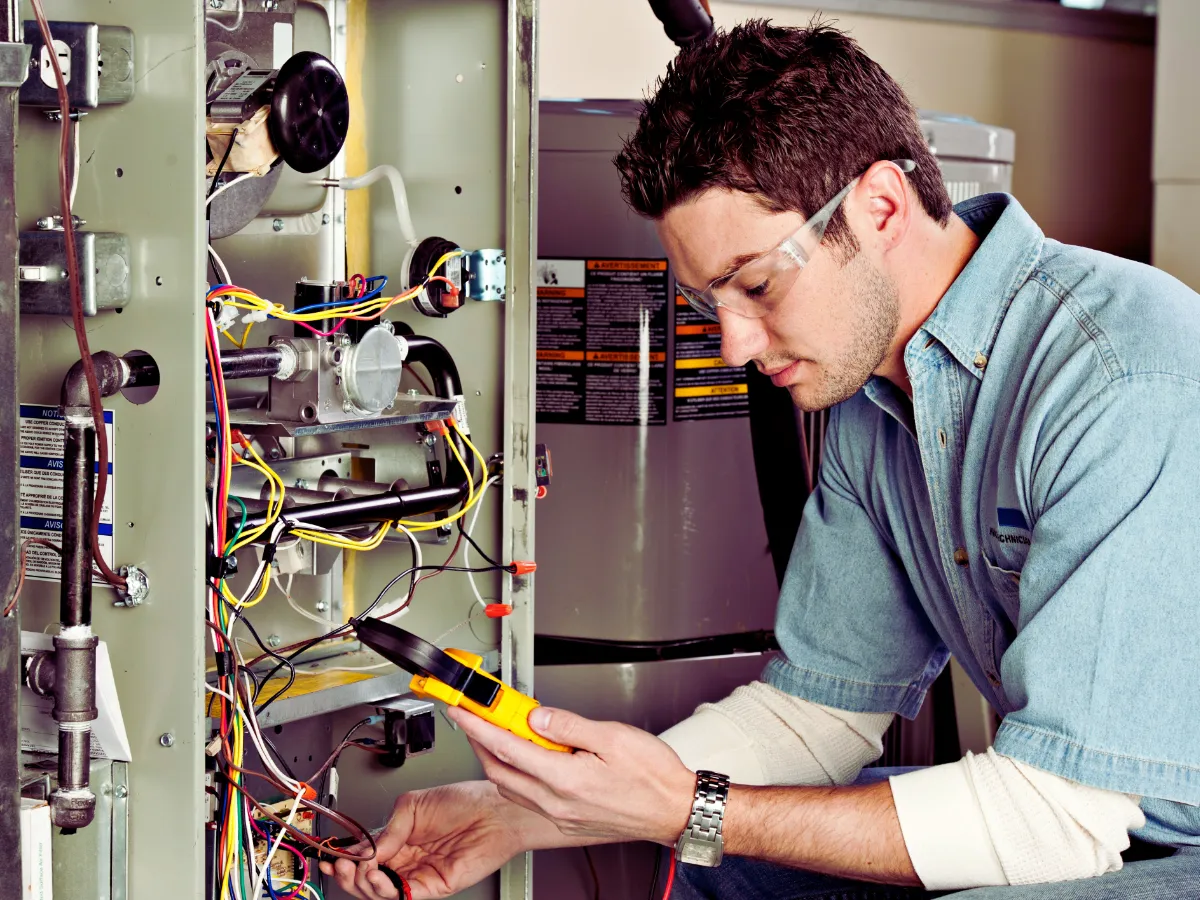 As a homeowner in Tampa, there are a few common signs you can watch out for to see if your furnace is getting too warm. If you are alerted to the following issues, schedule professional repairs right away to prevent mechanical damage and fire hazards.
- Burning odors or the smell of hot metal
- Short cycling
- Hot vents or cabinets
- Weird sounds
- Mid-cycle shutdowns
Is an Overheated Furnace Dangerous?
An overheated furnace is like a frozen pipe. While a frozen pipe might not burst today, it is bound to break apart at some point. Similarly, frequent overheating can eventually cause the heat exchanger to crack. If this occurs, there is a grave risk of carbon monoxide poisoning if the problem isn’t caught quickly. In addition to this risk, a hot furnace can result in a fire.
Overheating isn’t normal, but it is fixable. A professional technician can help you quickly determine and remedy the core issue.
What You Can Safely Check If Your Furnace Is Overheating
While serious issues should be left to the professionals, there are a few potential causes you can troubleshoot on your own.
- Check to see if the thermostat is set to the appropriate mode and temperature.
- Look for obstructed vents.
- Replace the air filter.
- Never open the cabinet or panel on your own.
Why a Furnace Keeps Overheating
Frequent overheating occurs if you are only performing temporary fixes. For long-lasting results, you have to solve the underlying cause. Worn components, an older system, and improper repairs can lead to more frequent overheating.
FAQs
To learn more about this common heating issue, read on to discover some of the most frequently asked questions.
Why does my furnace keep overheating and shutting off?
While the cause can vary, this problem often stems from a dirty filter, faulty limit switches, or blocked air vents. Basically, any issue that leads to poor airflow can cause your furnace to overheat.
Can a dirty filter really cause my furnace to overheat?
Absolutely. A dirty filter can decrease the amount of air getting into your system, which leads to overheating.
Should I turn off my furnace if it overheats?
Yes, you should. Turning off the furnace can help you mitigate damage to your furnace. Then, you can try troubleshooting by checking for closed vents and replacing your air filter. If these steps don’t work, you’ll need to schedule professional repairs.
Can an overheated furnace result in carbon monoxide leaks?
Yes, it can. If this problem occurs, the heat can crack the heat exchanger. As a result, there is a real risk of carbon monoxide poisoning for any family members who live inside the affected home.
How do I permanently put an end to my furnace’s overheating issues?
Routine maintenance can help you prevent common sources of overheating. Our technicians will point out any concerns during the tune-up, so you can fix minor problems before they escalate.
When To Call for Professional Heater Repairs
Don’t be afraid to call for help if you experience any of the following problems. Our team can assist you in figuring out if basic maintenance or more complicated repairs are needed.
 Error codes
- Unresolved issues with your airflow
- Repeated shutdowns
- Heat exchanger problems
Schedule Expert Heater Repair Today
Through our safety-first approach and diagnostic expertise, you can enjoy having a fast, efficient response to your furnace-related issues. Our team is on hand to help with overheated furnaces in Tampa and the surrounding areas.
An overheating furnace is your system pleading for help. When you reach out to our team, we’ll fix the cause and not just the symptom. Give us a call today for comprehensive heater repairs.
We’re always on time, or you don’t pay a dime!